
Marriage Counseling
Islamically-Informed
for Muslim Couples
Marriage in Islam isn't just romance and partnership — it's a trust from Allah, a place of sakinah (tranquility), mercy, and dignity. It is ميثاق غليظ (The Quranic expression for a weighty responsibility one makes with God Himself). But when the emotional connection cracks, when trust is shaken, or when resentment builds silently, a marriage can feel more like exile than home. If you're here, it's because you're tired of:
Feeling like roommates instead of spouses
Arguing that leads to harboring silent resentment
Feeling unseen, unappreciated, or misunderstood
Losing intimacy, attraction, or “the spark”
Carrying emotional pain with no safe way to release it
Trying to honor your faith while struggling privately
You’re not broken. Your marriage isn’t doomed. All you need is a safe space to heal with dignity, learn about your tendencies as well as your partners, and understand your religious obligations to renew your oath to each other and to God.





This isn't just about “communication issues.” This is deeper — and you know it.
Many Muslim Couples Struggle With:
1. Emotional Distance:
“We feel like roommates.”
When conversation becomes less empathic and more logistical (or literal), mercy and tenderness disappear, and you feel invisible in your own home.
2. Silent Resentment & Unspoken Hurt:
“I tried keeping the peace by avoiding.”
Patience turned into an emotional shutdown. Forgiveness turned into self-abandonment. Sabris is confused with silence.
3. Intimacy & Attraction Breakdown:
“I don’t know how to initiate anymore.”
Lack of desire. Shame. Awkwardness. Past porn use affecting connection. Touch feels distant — or pressured. Performance anxiety gets in the way of sex.
4. Masculinity & Femininity Roles:
“I feel like she doesn’t respect me anymore.” or “I’m tired of doing everything on my own.”
Tradition and modern expectations clash instead of complementing each other — leaving both partners misunderstood and defensive.
5. Family & Cultural Pressure:
“My parents are always involved in our marriage — and I can’t say no.”
The weaponization of family, in-law status, and religious obligations to maintain kinship bonds shatters the real “ahl” (family), which is the couple’s primary responsibility.
6. Religious Obligations and Ihsan:
“She’s getting in the way of my deen” or “It’s my right!”
What are your Islamic responsibilities to one another? What is allowed and what isn’t? What should be forgiven and what should be demanded for?
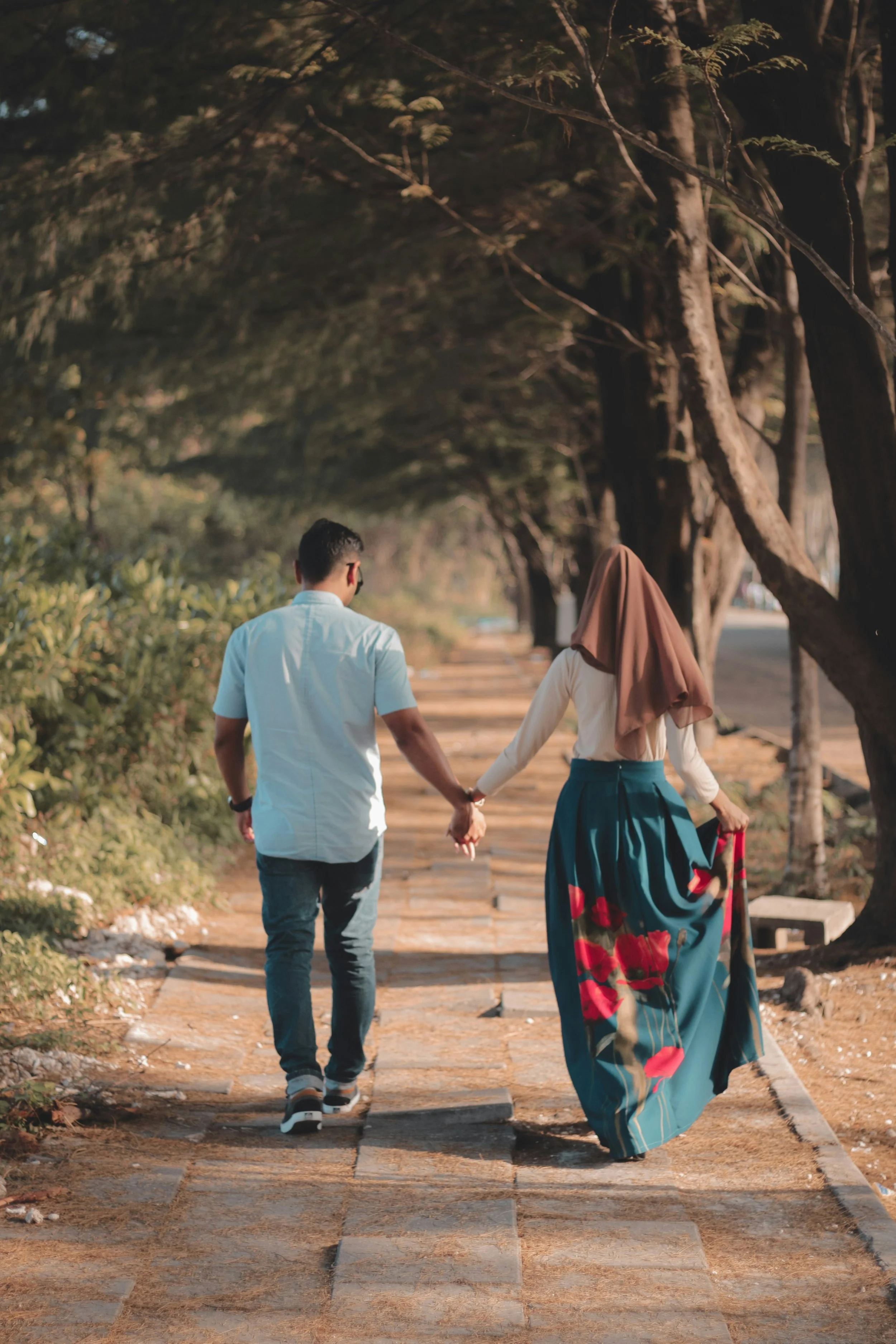
Stop Running From Your Obstacles.
Confront them with Courage Instead.
What we Provide

A Sound Islamic Framework of Marriage
What does it mean to be a husband, to be a wife? What does the Quran mean by “ahl” (family), and what is our God-given responsibility towards one another? Informed by over half a decade of Islamic studies and ongoing Scholarly supervision.
A Deeper Understanding of Your Needs and Why You Respond the Way You Do
Every behavior is a messenger trying to communicate something. By understanding your natural temperament and needs, you can begin to understand the motivations behind your behaviors and how to ask for them more healthily.
Restored Sexual Intimacy, Attraction, and spice
Address tension, performance anxiety, or diminished desire with tools that honor Islamic values and modern psychology. Assess your needs to rekindle desire, vulnerability, and closeness, creating healthy sexual and emotional intimacy that strengthens your bond.
Clinically Proven Tools & Practical Techniques to Navigate Your Differences
Conflict isn’t the issue; it’s how we respond and manage it. Get real-world strategies to identify, prevent, and effectively solve disputes, whatever the problem is, and whenever it may arise.
Strengthen Masculinity, Femininity, and Roles & Expectations
Discover your strengths as a husband or wife through an Islamically-informed lens. Build healthy masculinity and femininity, balance leadership and support, and cultivate a partnership where both spouses feel seen, respected, and empowered.
Navigate Family, Culture, and External Pressures
Learn to set healthy boundaries with parents, extended family, and cultural expectations. Protect your marriage from outside interference while maintaining honor and respect, so your partnership thrives on its own foundation.
Method:
Islamic Education + Evidence Based Practice
-
Traditional Islamic Sciences
Know with certainty the systematic Interpretations of Quranic expressions of family, marriage, and religious responsibilities. Unlike other services, these are scholarly-informed and vetted.
-

Aqidah-grounded Worldview
Approach your conflict differently by changing your perception of it. Understand the meaning of struggle and where to place your self-worth. Through sound knowledge naturally entails sound action.
-

Contemporary Clinical Methods
Receive mastery-level services from clinical experts. This includes evidence-based strategies from Gottman Method, Family Systems, and other modern therapies, informed by the latest research on marriage.
-
Neuroscience & Attachment Theory
Understand how your brain, emotional responses, and attachment patterns affect your relationship. Learn to rewire communication habits, regulate emotions, and build a secure connection with your spouse.
-

Gender Roles and Temperament
Discover traditional forms of healthy masculinity and femininity rooted in Islamic principles and psychology. Authentically master Emotional Intelligence to balance firmness and gentleness.



With: Tariq Elsaid, LMSW, TiiP
The difference between a Muslim therapist and an Islamically-trained one.
Work with a Muslim clinician who has formally studied the Islamic sciences under authentic scholars and institutions across the world. Mr. Elsaid is certified by the Khalil Center to approach the sensitive human experiences of sexual desire, lust, shame, guilt, and self-worth through traditional Islamic paradigms integrated with modern psychological techniques. Drawing on ongoing training from leading theologians and psychologists, Mr. Elsaid walks alongside you in a therapeutic process designed to restore spiritual integrity, emotional balance, and healthy masculinity — helping you align your inner life with your faith and purpose.
Now providing faith-based counseling for Muslim men in DC, Maryland, Virginia, Chicago, Houston, Austin, Dallas, Los Angeles, and San Francisco areas.
Specializing in porn addiction recovery/ sex addiction therapy, couples counseling and marital dissatisfaction, and masculinity coaching — all from Islamically informed counseling rooted in authentic scholarship and modern psychology.